If you have ever tried to subscribe to Netflix, pay for ChatGPT Plus, or shop on an international site, you have probably run into the same wall most Nigerians face: your local naira card gets declined, or your bank's dollar card takes days to sort out.
This is where the confusion between a virtual dollar card and a dollar debit card usually starts. They sound similar, they both let you spend in dollars, but they work very differently in practice. Understanding the difference can save you time, money, and a lot of failed transactions.
Here we break down what each option actually is, how they compare, and which one makes more sense depending on what you are trying to pay for.
What Is a Dollar Debit Card?
A dollar debit card is a physical card issued by a Nigerian bank, usually linked to a domiciliary account. It works similarly to your regular ATM card, except it is denominated in US dollars instead of naira, and it draws directly from your dollar balance whenever you make a payment.
To get one, you typically need to:
How to get a Dollar debit card?
- Open a domiciliary account with your bank
- Fund the account with dollars
- Meet minimum balance or documentation requirements, depending on the bank
- Wait for the bank to issue and activate the physical card
Dollar debit cards are useful for people who already hold foreign currency regularly, such as:
• Freelancers who get paid in dollars by foreign clients
• Businesses with recurring dollar transactions
• Individuals who receive international payments or remittances
What Is a Virtual Dollar Card?
A virtual dollar card is a digital dollar-denominated card that exists only online. There is no physical card to collect and no waiting period tied to bank processes.
Here is what sets it apart:
• No domiciliary account requirement
• Funded in naira through a wallet, not with existing dollars
• Created and activated almost immediately
• Used for international payments as soon as it is funded
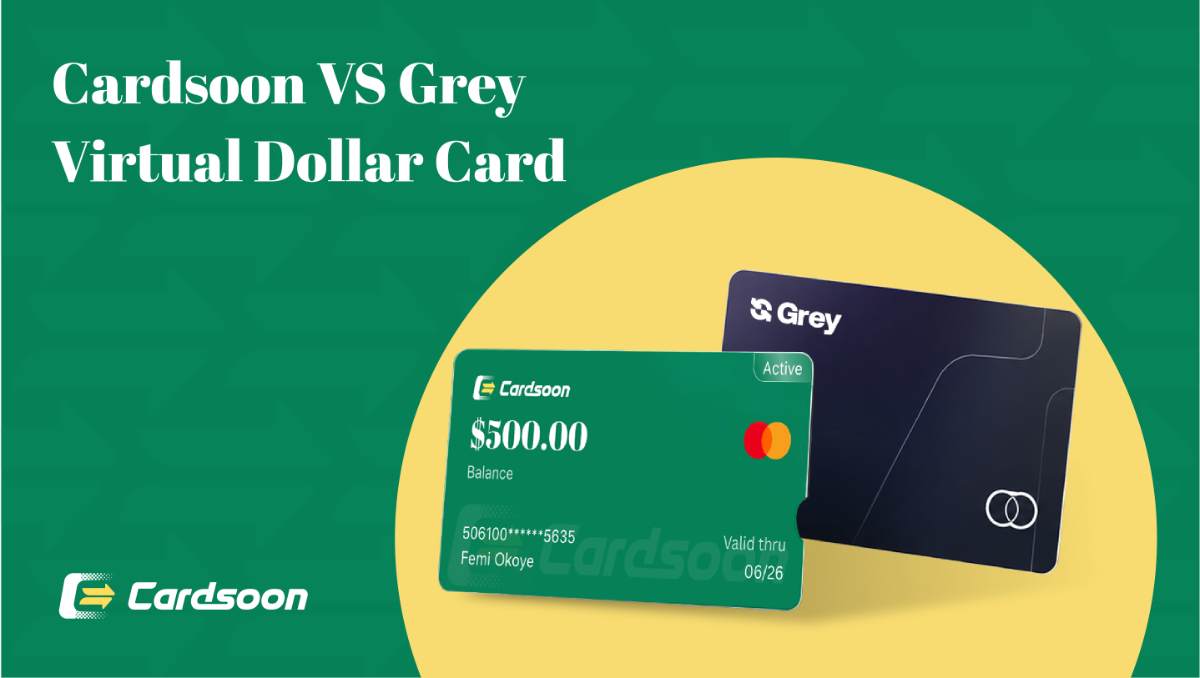
This is the model Cardsoon uses for its virtual dollar card in Nigeria. Instead of going through the traditional bank process, you fund your Cardsoon wallet, create your virtual card, and use it for subscriptions, software, and other online payments without needing to hold dollars yourself first.
Virtual dollar cards are built for one specific problem: making international online payments simple for people who do not have consistent access to foreign currency but need to pay for something international right now.
Virtual Dollar Card vs Dollar Debit Card: Key Differences
| Feature | Virtual Dollar Card | Dollar Debit Card |
| Format | Digital only, no physical card | Physical card |
| Setup requirement | No domiciliary account needed | Requires a domiciliary account |
| Funding | Fund with naira through a wallet | Fund with actual dollars |
| Issuance speed | Instant or near-instant | Can take days depending on the bank |
| Best for | One-off or recurring online payments | Holding and spending existing dollar balances |
| Accessibility | Available to most users without prior forex holdings | Requires existing access to foreign currency |
Speed and Setup of Virtual Dollar cards and Dollar Debit cards in Nigeria
This is usually the biggest deciding factor for choosing one among a virtual dollar card and a dollar debit card in Nigeria.
Dollar debit card setup involves:
• Opening a domiciliary account
• Meeting documentation requirements
• Waiting for the bank to issue and activate the card
• If you need to pay for something today, this process rarely works fast enough.
Virtual dollar card setup involves:
• Funding your wallet in naira
• Creating the card from your dashboard
• Using it immediately once funded
This matters if you are trying to renew a subscription before it expires or complete a purchase before a deal ends.
Funding Source of Virtual Dollar cards and Dollar Debit cards in Nigeria
A dollar debit card only works if you already have dollars in a linked account. If you do not regularly earn or hold foreign currency, keeping this card funded becomes an extra task on its own.
A virtual dollar card solves this differently:
• You fund it directly with naira
• The conversion happens as part of the funding process
• There is no need to source or hold dollars beforehand
With Cardsoon specifically, funding your virtual dollar card works like this:
• Fund your Cardsoon wallet with naira through your preferred payment method
• Trade a gift card on Cardsoon and use the payout to fund your wallet
• Move funds from your wallet balance directly into your virtual dollar card
This means you do not need a separate source of dollars to keep your card active. If you already have gift cards sitting unused, trading them on Cardsoon can be a straightforward way to top up your wallet and fund your virtual dollar card in one flow.
This matters for the average Nigerian user who earns in naira but occasionally needs to make dollar payments, rather than someone who consistently transacts in foreign currency.
What Virtual Dollar card and Dollar Debit card is Best Used For?
Choose a virtual dollar card if you want to:
• Pay for utilities that come in dollars like Canva, Claude, ChatGPT Plus using a virtual dollar card
• Pay for entertainment subscriptions like Youtube, Amazon prime, Netflix using a virtual dollar card
• Make a one-time international purchase without holding dollars
• Fund a payment quickly using naira you already have
These are recurring or one-time international payments where speed and naira funding matter more than holding a dollar balance long-term.
Choose a dollar debit card if you:
• Already receive income in dollars
• Want a card that reflects your existing dollar balance directly
• Prefer not to convert from naira each time you spend
Neither option is universally better. The right choice depends on whether you already hold dollars or need a way to pay in dollars without one.
It also comes down to how each card fits your everyday financial habits:
• A dollar debit card assumes you already manage a separate foreign currency balance and are comfortable moving money between accounts to keep it funded. This works well for people whose income or business already involves regular dollar inflows.
• A virtual dollar card assumes the opposite starting point. It is built for people whose income and daily spending happen in naira, but who occasionally need a dollar transaction for a specific purpose, whether that is a subscription renewal, a one-time purchase, or a tool they need for work. The naira-to-dollar step happens at the point of funding the card, so there is no need to maintain a separate foreign currency habit just to make a single payment.
Why Nigerians Are Choosing Virtual Dollar Cards for Everyday Payments?
For most people paying for AI tools, streaming subscriptions, software, or online shopping, the barrier is not a lack of desire to pay. It is the lack of a fast, accessible way to pay in dollars without going through a bank process built for people who already hold foreign currency.
This is the gap Cardsoon's virtual dollar card is built to close. A few reasons it works for everyday users:
• Funded in naira, with no need to source dollars first
• No domiciliary account required
• Suited to occasional dollar payments rather than as a primary banking product
• Created and used without a long approval process
If cost is also a concern, looking for Cardsoon virtual dollar card, which is the cheapest virtual dollar card in Nigeria, often comes down to comparing:
• Card creation fees
• Funding processes and any conversion costs
• Ease of use across different platforms
Not all virtual card providers charge the same way, so it is worth comparing these factors rather than assuming they are identical.
How to Get a Cardsoon Virtual Dollar Card?
- Create a Cardsoon account and fund your wallet in naira.
- Request a virtual dollar card from your dashboard.
- Pay the card creation fee (currently $1).
- Fund your virtual card by selling gift cards in Nigeria
- Use your card details for international payments, subscriptions, or online purchases.
If you have gift cards you no longer need, you can convert them into naira through gift card trading app with high rates like Cardsoon, then use that balance to fund your virtual dollar card whenever you need.
Frequently Asked Questions
- Do I need a domiciliary account for a virtual dollar card?
- No. A virtual dollar card, including Cardsoon's, does not require a domiciliary account. You fund it directly with naira.
- Which is faster to set up, a virtual dollar card or a dollar debit card?
- A virtual dollar card is typically faster since there is no physical card issuance or domiciliary account approval process involved.
- Can I use a virtual dollar card for recurring subscriptions like Netflix or ChatGPT Plus?
- Yes, virtual dollar cards can be used for recurring international payments as long as the card remains funded for each billing cycle.
- Is a dollar debit card better for holding foreign currency long-term?
- Yes, if you regularly receive or hold dollars, a dollar debit card linked to a domiciliary account may suit your needs better than a virtual card.
- Do virtual dollar cards work on all international platforms?
- Most virtual dollar cards work on major international platforms, but acceptance can vary by provider and platform, so it is worth confirming with your provider.
Final Thoughts
A virtual dollar card and a dollar debit card solve different problems. One is built for speed and naira-funded convenience, while the other suits people who already operate with dollars regularly.
If your priority is paying for international subscriptions, software, or online tools without holding foreign currency, a virtual dollar card is the more practical route. You can get started with virtual dollar card in Nigeria through Cardsoon in a few minutes, funded entirely in Naira.